Search is no longer just about getting your website onto page one of Google.
A business owner might search “best web development company for small businesses” on Google or ask ChatGPT which platforms or developers are best for their needs. They may also watch YouTube videos comparing WordPress with custom development. Or, they can use an AI tool to compare different web development approaches based on cost, performance, and scalability.
The question for web development businesses is no longer simply:
“How do we rank on Google?”
It is: “How do we ensure users discover, understand, and trust us when searching for a small business web development company?”
That is where SEO, AEO, and GEO come in.
These approaches overlap, but they serve different purposes. SEO focuses on visibility in traditional search.
AEO focuses on providing clear answers to specific questions.
GEO focuses on making your brand and content understandable and useful within generative AI search experiences. Let’s explore each of them and their vitality for a business and its website.
SEO vs AEO vs GEO: What Is the Difference?
The terminology is not used consistently across the digital marketing industry. For that reason, businesses should focus less on the acronyms and more on how people actually search, ask questions, compare options, and make decisions.
Build around the behaviour behind them.
Users search. They ask questions. They compare options. They look for evidence. Then they decide whether they trust a web development company.
Your content should support each stage.
What Is SEO?
Search Engine Optimization (SEO) is the process of improving your website and content so search engines can understand, index, and surface your pages for relevant searches.
For example, if you are running a web development company, SEO opportunities could include:
- Web development services
- Custom web development
- Web development company
- Web development company in [city]
- Website development services
- Custom website development
- Business website development
- Ecommerce website development
- WordPress web development
- React web development
- Website redesign services
- Mobile-friendly website development
SEO is not simply inserting keywords into articles.
A stronger strategy connects search intent, useful content, website structure, internal linking, technical accessibility, and authority.
A practical SEO programme can include:
- Keyword and search-intent research
- Topic clusters
- Helpful, original content
- Optimised titles and headings
- Internal linking
- Technical SEO
- Relevant external references
- Strong user experience
- Search and conversion measurement
What Is AEO?
Answer Engine Optimization (AEO) focuses on making content easy for search engines and answer-oriented systems to understand when responding to specific questions.
To make the distinction practical, we’ll use a small-business web development company throughout this guide.
Compare:
“Web development companies”
with:
“How much does it cost to build a custom website for a small business?”
AEO is a content/optimization approach designed to make information easier to retrieve, understand, and present in answer-oriented search experiences.
AEO Opportunities for a Web Development Business
You can build content around the questions business owners, marketers, and decision-makers regularly ask when choosing, planning, or improving a website, such as:
- How much does it cost to build a website?
- How long does it take to develop a website?
- What type of website does my business need?
- Should I use WordPress or custom web development?
- What is the difference between a website redesign and a new website?
- How do I know if my website is mobile-friendly?
- Can a web developer improve my website’s loading speed?
- What should a business website include?
These questions can become dedicated articles, service-page sections, comparison pages, FAQs, guides, and supporting content clusters.
The objective is not to add FAQs because they are supposedly “good for SEO.”
Create them because real customers need clear answers before they choose a web development solution.
What Is GEO?
Generative Engine Optimization (GEO) is commonly used to describe efforts to improve how a brand, organisation or content is understood, surfaced or referenced within generative AI search experiences.
GEO is a commonly used industry term for efforts aimed at improving how brands and content are represented, surfaced or cited in generative AI search experiences.
Imagine a small web development company that builds websites for local businesses. Instead of simply publishing blogs such as “5 Reasons Your Business Needs a Website,” the company may use AI to analyse customer questions.
It also identifies high-intent search queries, structures content for answer engines, and creates location-specific pages that address the actual problems its prospects are trying to solve.
What Supports GEO?
A stronger GEO approach includes:
- Genuine subject expertise
- Original and useful information
- Topical authority
- Consistent business and brand information
- Clear organisation and entity information
- Credible sources for important claims
- Detailed answers to audience questions
- Relevant third-party mentions and references
- Content designed primarily to help people
GEO should not become a strategy of publishing hundreds of generic AI-generated articles.
The objective is to build a credible knowledge footprint around the subjects your organisation genuinely understands.
SEO vs AEO vs GEO: How They Work Together
A simple way to remember the distinction is:
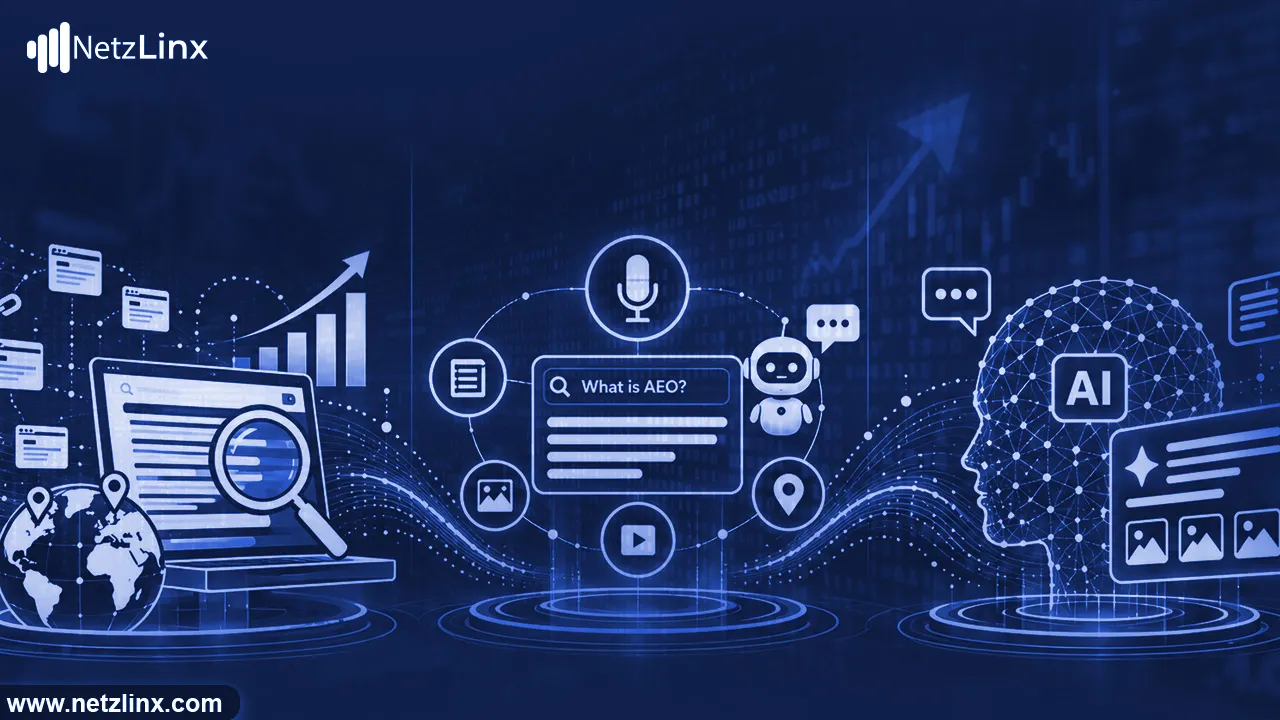
SEO helps people find you.
AEO helps people get answers from you.
GEO helps your brand become understandable and discoverable within generative search experiences.
These approaches can reinforce one another.
Consider a web development company publishing an article titled “How Much Does a Business Website Cost in 2026?”
SEO can help the page target searches such as “business website development cost,” “website development pricing,” and “how much does a business website cost?”
AEO can organise the content around the questions potential clients actually ask:
- How much does a business website cost?
- What factors affect website development costs?
- How long does it take to build a business website?
- What should be included in a professional website?
- Should a business choose WordPress or custom web development?
GEO can then make the information easier for generative search systems to understand by providing clear answers, defining important entities and services, supporting claims with credible information, and presenting the company’s expertise in a way that should be interpreted and cited by AI-powered search experiences.
One strong piece of content can therefore support multiple search experiences.
Which Strategy Should Your Business Prioritize?
Do not begin with:
“Should we do SEO, AEO or GEO?”
Start with:
“Where are we losing potential customers?”
If Organic Visibility Is Weak, Strengthen SEO
If your website has little organic traffic, poor keyword visibility, weak page structure, thin content, poor internal linking,g or technical problems, SEO fundamentals need attention first.
There is little value in pursuing advanced AI visibility while your website itself provides weak information.
If Customers Ask the Same Questions, Invest in AEO
Web development is also a question-heavy buying journey. Before hiring a web development company, potential clients often want clear answers about:
- Website development costs
- How long a website takes to build
- WordPress vs custom development
- Ecommerce website development
- Mobile responsiveness
- Website maintenance and support
- SEO-friendly website development
- Website security
- CMS options
- Custom features and integrations
- Website redesigns
- Hosting and ongoing maintenance
These questions are valuable opportunities to make your website more useful — and more visible in answer-focused search.
Instead of publishing another generic article such as “Why Your Business Needs a Website,” you could create content around questions with genuine commercial intent, such as:
“How Much Does a Business Website Cost?”
or:
“How Long Does It Take to Build a Business Website?”
or:
“Should I Choose WordPress or a Custom-Built Website?”
The goal is not to create a separate page for every possible question. It is to identify the questions that matter to your potential customers, answer them clearly and accurately, and connect those answers naturally to your web development services.
The Biggest Mistake: Treating GEO as “AI SEO”
Adding phrases such as “best web development company for small businesses” to dozens of pages will not automatically make a business authoritative. Nor will publishing large volumes of generic AI-generated content.
The better question is:
What information can you provide that genuinely helps small businesses make better decisions when choosing a web development company?
That could include:
- Website project cost breakdowns
- Platform comparisons
- Development timelines
- Feature comparisons
- Case studies
- Technical recommendations
- Industry-specific website requirements
This approach gives potential customers useful information while also helping search systems better understand the company’s expertise, services, and areas of specialisation.
The goal is not to produce more content simply for the sake of search visibility.
It is to build a useful, credible information resource that helps customers make informed decisions.
That is what turns content from a collection of blog posts into a genuine business asset.
How SEO, AEO and GEO Work Together
For your web development brand, you can create a connected topic ecosystem around web development services.
Pillar Content
Web Development Company for Small Businesses
Core intent:
“I own a small business. I need a website that looks professional, works properly, attracts customers and helps my business grow. Who can build it for me?”
The pillar should cover:
- What small-business web development includes
- Custom vs template websites
- WordPress vs Shopify vs other platforms
- Mobile responsiveness
- Website speed
- SEO-ready development
- Local SEO foundations
- Conversion-focused design
- Security and maintenance
- Integrations
- Website costs
- Development process
- When a redesign is necessary
- How to choose a developer
- FAQs
- Case studies/proof
- CTA
Then link naturally and strategically to the relevant supporting pages below.
SEO supporting pages
These should capture commercial and informational searches around web development.
Core commercial pages
- Small Business Website Development Services
- Custom Website Development for Small Businesses
- Affordable Web Development for Small Businesses
- Small Business Website Design and Development
- Professional Website Development for Small Businesses
- Website Redesign Services for Small Businesses
- WordPress Web Development for Small Businesses
- Shopify Web Development for Small Businesses
- Ecommerce Website Development for Small Businesses
- Local Business Website Development Services
These are especially useful because they move users closer to contacting the company rather than merely educating them.
AEO pages
Don’t think of AEO as creating “AI pages.” Google explicitly says there are no special technical requirements or special markup needed for AI Overviews/AI Mode; the underlying SEO fundamentals still matter.
Instead, create pages that give clear, self-contained answers to questions.
- What Is Web Development for Small Businesses?
- What Is the Difference Between Web Design and Web Development?
- Do Small Businesses Really Need a Website?
- How Much Should a Small Business Spend on a Website?
- What Should a Small Business Look for in a Web Developer?
- What Platform Is Best for a Small Business Website?
- Is WordPress Good for Small Businesses?
- Is Shopify Good for Small Businesses?
- How Long Should a Small Business Website Last?
GEO / AI-search supporting pages
- How AI Is Changing Small Business Websites
- How to Build an AI-Ready Website for a Small Business
- What Makes a Website Easy for AI Search Engines to Understand?
- How Structured Data Helps Search Engines Understand Your Business
- How to Make Your Business Website More Visible in AI Search
- SEO, AEO and GEO for Small Business Websites: What’s the Difference?
- How AI Overviews Are Changing Small Business Search Visibility
- How to Structure Website Content for Google and AI Search
- Why Entity Clarity Matters for Small Business Websites
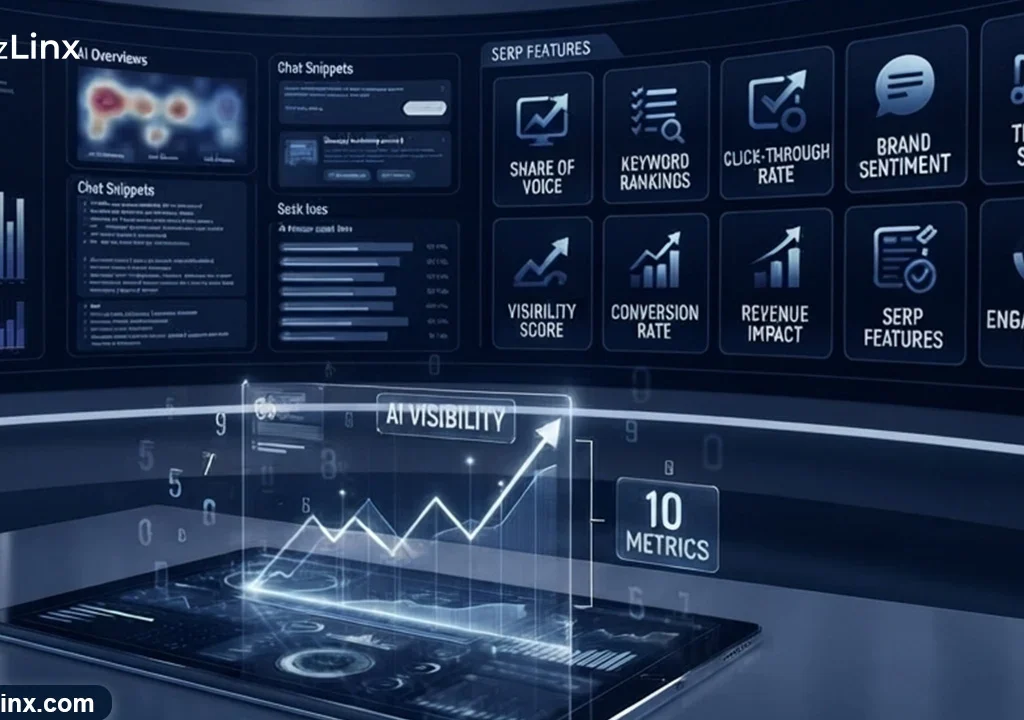
SEO KPIs
- Organic impressions
- Organic clicks
- Search CTR
- Relevant keyword visibility
- Organic engagement
- Organic enquiries
- Qualified leads
AEO KPIs
- Visibility for question-based queries
- Performance of answer-focused pages
- Engagement with FAQ content
- Informational-query clicks
- Assisted conversions
GEO KPIs
- Relevant brand mentions in AI search experiences where measurable
- AI-platform referral traffic where identifiable
- Branded search growth
- Relevant third-party mentions
- Qualified enquiries influenced by informational content
SEO, AEO or GEO: Which One Does Your Business Need?
The practical answer is:
You probably need all three, but not necessarily at the same intensity or at the same time.
- SEO provides the foundation for discovery.
- AEO helps you answer specific questions clearly.
- GEO extends the visibility challenge into generative search experiences.
The strongest content is therefore not necessarily the article that talks about your brand the most. It is the article that makes a small business owner think:
“This answered exactly what I needed to know.”
That is where search visibility begins turning into trust.
Ready to Maximize Your Visibility Online?
Search is changing. Your next customer may not rely on a traditional list of blue links. They’ll ask ChatGPT, Gemini, or Perplexity and get a shortlist of recommended brands. “If AI-powered search cannot easily understand your business, you may miss opportunities to appear in those discovery experiences.
What Does Netzlinx Do for Clients?
- Build AI-ready websites and structured content frameworks for businesses across multiple sectors.
- Deliver GEO and AEO strategies that help brands appear in ChatGPT, Perplexity, and Google AI Overview.
- Implement technical SEO foundations such as crawlability, schema markup, internal linking, and site architecture.
- Create content ecosystems around real customer questions, not keyword lists.
FAQs
What is the difference between SEO, AEO and GEO?
SEO focuses on visibility in traditional search results. AEO focuses on providing clear answers to user questions, while GEO is commonly used for visibility and representation within generative AI search experiences.
Is SEO still important with AI search?
Yes. Strong websites, useful content, clear information architecture, and technical accessibility remain important foundations for search visibility.
Is AEO the same as GEO?
No. The terms overlap and are not used consistently across the industry. AEO generally focuses on answer-oriented search experiences, while GEO commonly refers to optimisation for generative AI systems.
Does GEO replace SEO?
No. GEO should not be treated as a replacement for SEO. Businesses can build strong SEO foundations while also creating content that is useful for AI-driven search experiences.
How can a brand improve GEO?
A brand can improve GEO by making itself easy for AI systems to understand, trust, and cite. That starts with strong crawlable pages, clear structure, and useful content. From there, the work involves publishing original research and expert content.
Should every business invest equally in SEO, AEO and GEO?
No. The appropriate mix depends on the business, audience, existing visibility, customer journey and goals.
Ready to Improve Your Brand’s Visibility in AI Search?
Netzlinx builds the structured content, technical foundations, and authority signals that help your business become easier to discover and understand across traditional search and AI-powered search experiences.
Get your free AI visibility audit today.
We’ll show you where you stand, what your competitors are doing, and exactly what it takes to close the gap.