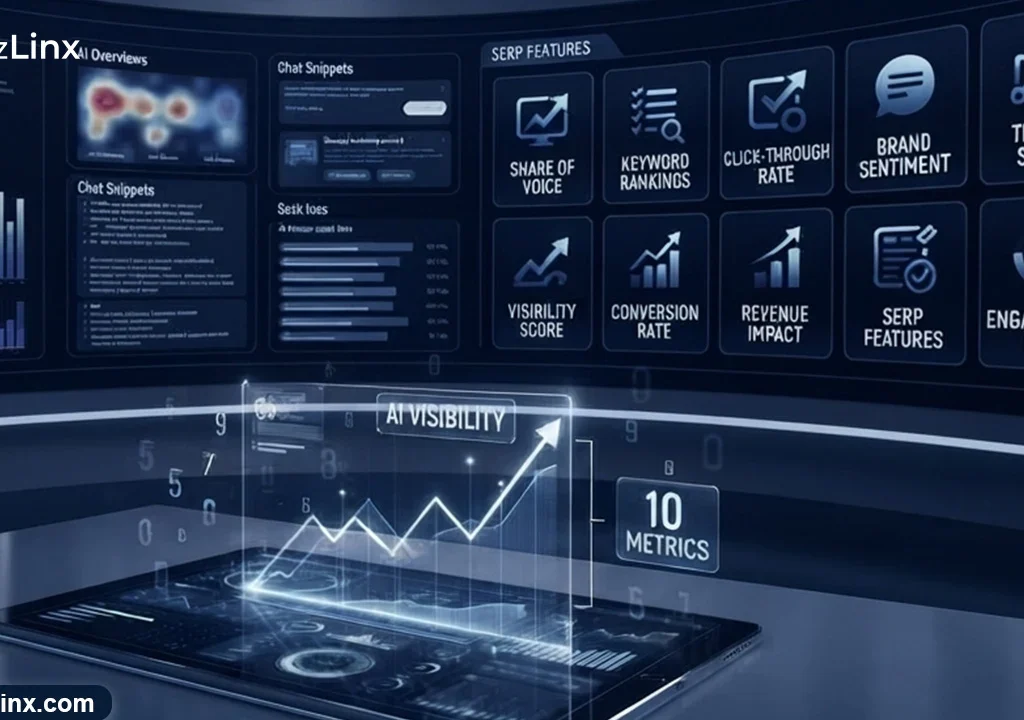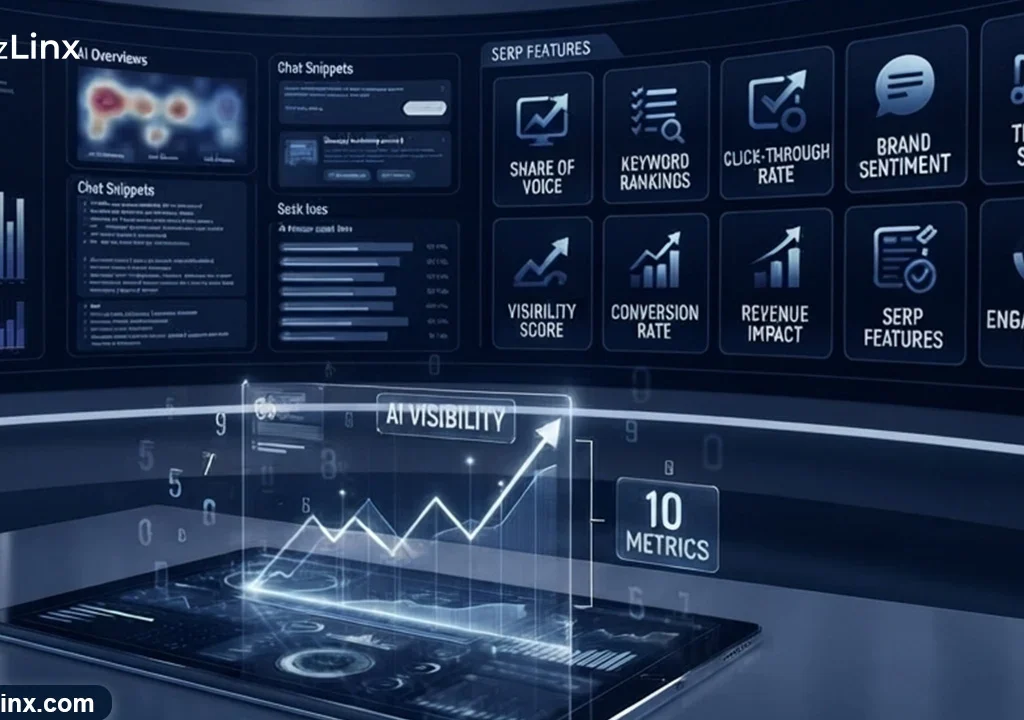
Your website can rank on Google and still fail to appear in AI-generated answers. This is because traditional search rankings and AI search visibility are connected, but not the same. AI-powered search experiences can retrieve and select sources based on factors such as relevance, accessibility, content quality, and the context of the user’s query.
If your website is not appearing in AI search, the solution is not simply adding more keywords. Start by checking whether important pages are indexed, whether your content matches search intent, whether it answers questions clearly, and whether your website demonstrates genuine expertise.
When a website is not appearing in AI search, technical accessibility, brand information, topical coverage, content freshness, and ongoing measurement should also be reviewed.
The following 6 fixes provide a practical framework for identifying and improving the gaps that may limit your visibility.
How AI Search Differs From Traditional Search
Traditional search results typically present links to pages that match a user’s query, while AI-powered search experiences can retrieve information from multiple sources and use it to generate a response.
AI search can work differently. An AI-powered search experience may interpret the question, retrieve relevant information, generate a response, and provide links or citations to sources supporting that response.
For example, someone searching for “best SEO agency for a small business” may want information about services, experience, pricing, reporting, location, and suitability for their business.
A website may rank for “SEO agency” but still not be selected for that particular answer if another source provides more relevant information or clearer supporting evidence.
Therefore, when your website is not appearing in AI search, look beyond keyword rankings. Ask whether the page gives search systems enough useful information to understand the question, the answer, and the business behind the content.
1. Check Whether Your Page Is Indexed
If your website is not appearing in AI search, begin by checking its visibility to search engines. Before a page can be considered for search results, search engines need to find, crawl, and process it. Google Search Console can help you identify whether the page has been indexed or if a technical issue is limiting its visibility.
Pay attention to these areas:
- The URL appears in Google’s index
- A noindex directive is not preventing indexing
- Robots.txt allows search engines to access the page and its essential resources
- The canonical tag points to the intended URL
- No crawl or indexing issues are affecting the page
- The URL is listed in the XML sitemap
- Relevant pages link to it through your website
Publishing a page does not automatically mean that search engines have discovered and processed it. A page may be accessible to visitors while remaining unindexed or difficult for search engines to crawl.
If your website is missing from AI-generated results, technical indexing problems should be one of the first areas you investigate. Resolve these technical issues first. Once search engines can properly access and process the page, you can focus on improving its content, relevance, and keyword targeting.
2. Match Content With Search Intent
When your website is not appearing in AI search, examine what the user actually wants from the query. Search intent refers to the purpose behind a search. A user searching for “digital marketing services” could be researching available services, comparing agencies, looking for pricing, or preparing to contact a provider.
A useful page should address the needs behind the query instead of simply repeating the target keyword.
For example, a commercial service page may need to explain:
- What services are included
- Who the service is suitable for
- What the process involves
- How performance is measured
- What factors affect cost
- What a client can expect from the engagement
When your website is not appearing in AI search, an answer-first structure can make important information easier to identify and evaluate. This distinction is important. Search intent tells you what information the user needs; answer-focused content determines how clearly and quickly your page provides it.
At Netzlinx, this can mean connecting SEO, content writing, web development, data analytics, and related digital services with specific business needs rather than presenting them as a generic list of services.
3. Answer the Main Question Clearly
A page can match search intent and still make the reader work too hard to find the answer. If your website is not appearing in AI search, review how quickly important information appears on the page. Long introductions, vague statements, and promotional paragraphs can delay the information users actually need.
Compare these two approaches.
- Vague opening: Businesses need effective digital strategies to compete in an increasingly connected online environment.
- Direct opening: Your website may not appear in AI search because it is difficult to access, does not match the user’s question, or lacks clear and trustworthy information.
The second approach immediately establishes the subject and prepares the reader for the explanation.
Use an answer-first structure for important sections:
- Give the direct answer.
- Explain why it matters.
- Provide supporting evidence or context.
- Give an example where useful.
- Suggest the appropriate next step.
This improves usability and makes important information easier for readers and search systems to identify. The goal is not to write every paragraph as a one-line answer. Instead, make sure the most important information is clear before expanding into supporting detail.
4. Add Original Expertise and Evidence
Generic content may also limit your AI search visibility, especially when competing pages provide stronger evidence. Recommendations such as “create high-quality content,” “use relevant keywords,” and “build backlinks” are common across thousands of websites. These statements may be correct, but they provide little evidence of unique expertise.
Strengthen your content with information that demonstrates what your business actually knows and does.
Useful additions include:
- First-hand observations
- Client lessons
- Anonymized examples
- Original data
- Expert commentary
- Tested processes
- Screenshots
- Case studies
- Industry-specific examples
- Transparent limitations
Competitor analysis can help identify these gaps. Search for the questions your customers ask and examine the pages that appear in AI-generated answers. Compare their evidence, depth, examples, expertise, and organization with your own content.
Do not copy the competing pages. Instead, ask: What useful information does the selected source provide that our page does not?
That question turns competitor research into an improvement process rather than a copying exercise.
For Netzlinx, an AI visibility article becomes more authoritative when it explains an actual audit methodology, shows how customer queries are tested, or provides anonymized observations from digital marketing work.
5. Build Complete Topical Coverage
A single page cannot always answer every related question around a competitive subject. If your website is not appearing in AI search, look at whether your website provides enough supporting information around the topic.
For example, an SEO service page could be supported by useful resources covering:
- Technical SEO
- Keyword research
- Search intent
- Content strategy
- Local SEO
- Link building
- SEO reporting
- Website audits
- Industry-specific SEO
- SEO campaign expectations
The purpose is not to create dozens of short articles that repeat the same information. Build a connected group of useful pages, with each page serving a distinct purpose.
Use internal links where they genuinely help readers move between related subjects. A service page can introduce a concept, while a supporting article can explain that concept in greater depth. This creates a clearer information structure for both users and search systems.
6. Keep Important Content Current and Track AI Visibility
Freshness matters most when information changes frequently. If your website is not appearing in AI search, review whether important pages contain outdated information.
Check:
- Statistics
- Pricing
- Software features
- Platform policies
- Search developments
- Industry examples
- Technical standards
- External links
Do not update a publication date simply to make an old page appear new. Make meaningful improvements that help the reader. At the same time, create a system for measuring AI search visibility.
Build a list of real questions your customers may ask and test them periodically across relevant AI search experiences. Record:
| Metric | What to check |
| Brand mention | Does your business appear? |
| Citation | Is your website linked or cited? |
| Competitors | Which competitors appear instead? |
| Source page | Which page is being used? |
| Query type | Informational, commercial, comparison, or local? |
| Location | Does the result change by market? |
Also monitor Google Search Console, organic traffic, leads, and conversions.
AI visibility is useful, but a mention alone is not the final objective. A strong strategy should ultimately help the business attract relevant visitors, generate enquiries, and convert qualified customers.
How to Fix Website is not Appearing in AI search
1. Check Indexing
Check: Review indexing, noindex, robots.txt, and canonical issues in Google Search Console.
Fix: Resolve anything blocking crawling or indexing.
Verify: Reinspect the URL and monitor its indexing status.
2. Check Search Intent
Check: Compare your page with the questions and needs behind your target queries.
Fix: Add missing information and remove irrelevant sections.
Verify: Make sure each important query has a clear answer.
3. Check Answer Clarity
Check: See whether key information is easy to find and understand.
Fix: Use clear headings, short paragraphs, lists, and tables where useful.
Verify: Scan the page and confirm the main answers are easy to locate.
4. Check Evidence
Check: Identify claims that lack sources, examples, or first-hand support.
Fix: Add credible sources, data, examples, or case studies.
Verify: Make sure important claims are accurate and supported.
5. Check Internal Links
Check: Find relevant pages that are disconnected or difficult to reach.
Fix: Add useful internal links with descriptive anchor text.
Verify: Ensure every link leads to a relevant, useful page.
6. Check AI Visibility
Check: Test real customer queries and record mentions, citations, competitors, and source pages.
Fix: Improve pages where clear gaps appear.
Verify: Retest periodically and compare AI visibility with traffic, leads, and conversions.
If your website is not appearing in AI search, use this checklist to identify gaps systematically rather than changing multiple SEO elements at once. This process helps make AI search visibility an ongoing SEO activity rather than a one-time content task.
Website is not Appearing in AI search: What to Do Next
If your website is not appearing in AI search, focus on making it easier to discover, understand, evaluate, and trust. The strongest approach combines technical accessibility with useful content, clear search intent, original expertise, strong topical coverage, accurate business information, and ongoing measurement.
For businesses that need support with SEO, content writing, web development, analytics, and broader digital marketing, Netzlinx can help identify visibility gaps and build a connected strategy around measurable business goals.
Want to find out why your website is missing from AI-generated answers? Contact Netzlinx for a website and AI search visibility assessment.
Frequently Asked Questions
Why is my website not appearing in AI search?
If a website is not appearing in AI search answers, the relevant page may not be indexed, may not sufficiently match the query, or may provide less useful information or evidence than other available sources. Start by checking indexing, relevance, content quality, and technical accessibility.
Can a website rank on Google but not appear in AI search?
Yes. Ranking in traditional search results does not guarantee that a page will be selected or cited in an AI-generated answer. AI search experiences can retrieve and evaluate sources differently depending on the query and context.
How can I improve AI search visibility?
Improve your site’s indexability, match content to search intent, provide clear answers, demonstrate genuine expertise, strengthen relevant internal links, and keep important information accurate and current. Test relevant queries regularly to monitor changes in visibility.
How can a digital marketing agency help improve AI search visibility?
A digital marketing agency can review technical SEO and indexing, improve search-intent targeting, strengthen content and internal linking, identify content gaps, and monitor AI search visibility alongside organic traffic, leads, and conversions. If a website is not appearing in AI search, this type of structured review can help identify the areas that need improvement.