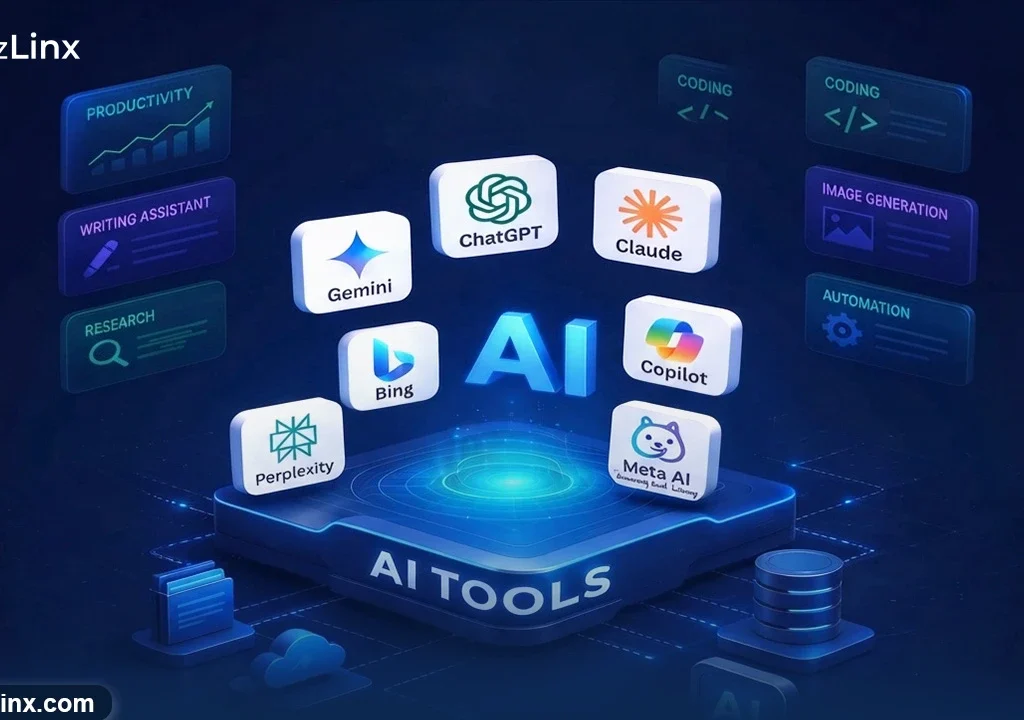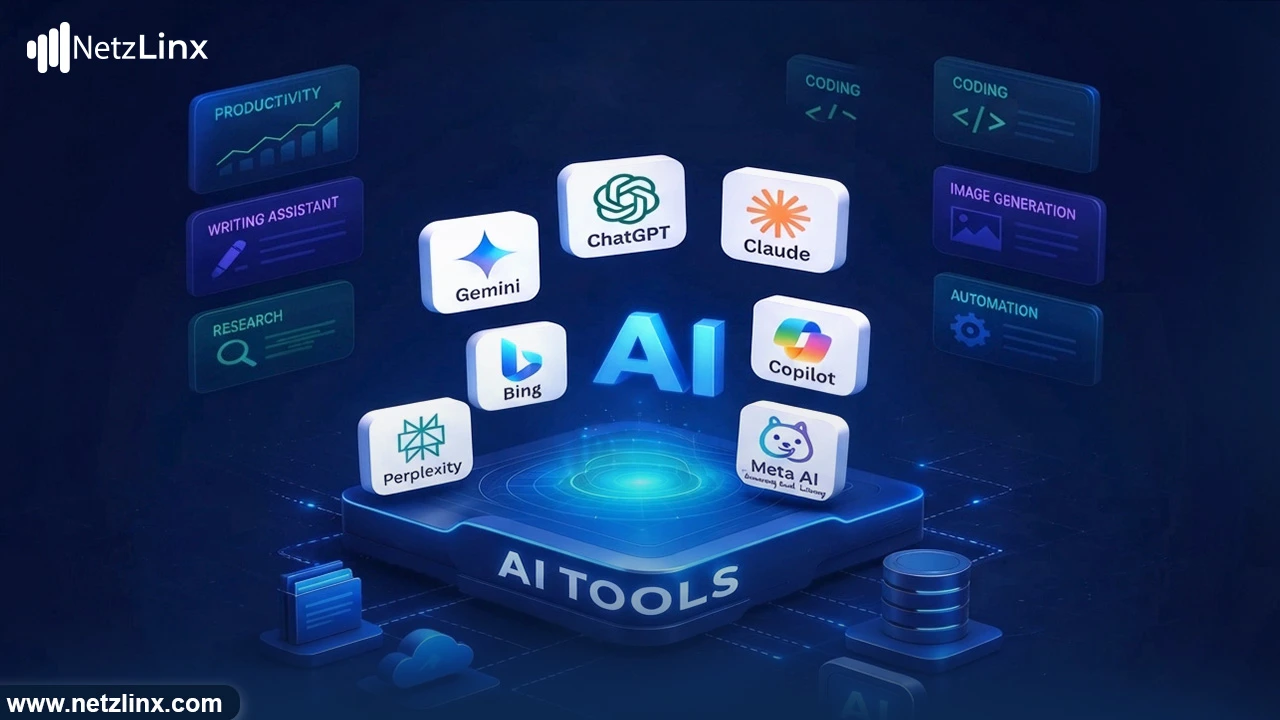
Your next customer may discover your business through an AI-generated answer before they ever visit Google.
ChatGPT, Gemini, Perplexity and Google’s AI search experiences are changing how people research businesses, compare options and find answers.
That creates a new visibility problem for businesses: it’s no longer enough to rank pages. Your brand also needs to be clearly understood, discoverable, and supported by credible information across the web.
That’s where AI search optimization and Generative Engine Optimization (GEO) come in.
According to Semrush, AI-driven search and discovery are expected to become an increasingly important source of website traffic in the coming years. The exact pace of change will vary by industry, search behaviour and platform, but the direction is clear: businesses now need to consider how their information is discovered not only through traditional search engines, but also through AI-powered search experiences.
In this post, you’ll understand how these signals can help establish clearer, more consistent information about the business to help it get discovered in AI.
What Is GEO (and How Is It Different from SEO)?
Traditional search engines work like libraries. They index pages and rank them in a list. Generative engines work more like analysts. They interpret a question, pull information from multiple sources, and generate a single answer.
GEO is the practice of shaping your website and wider digital footprint so AI systems choose your content when generating those answers.
It’s not a replacement for SEO. It’s an evolution of it. According to Google Search Central, existing SEO fundamentals remain foundational for AI search experiences.
Strong organic visibility can increase the number of opportunities for your content to be discovered and cited, but ranking in Google’s traditional results does not guarantee inclusion in AI-generated answers.
How AI Decides Which Brands to Recommend
Several observable factors can affect how easily a business can be understood, discovered and supported by information available to AI search systems. AI platforms do not publish a universal checklist for brand recommendations. However, research, platform documentation and practical observation suggest several factors are worth addressing when improving AI search visibility.
- Relevance. Does your company actually match the user’s question? A general marketing agency with no visible SaaS expertise may be less relevant than one with documented experience in that niche.
- Authority. Does your brand have credible evidence of expertise? This comes from original research, expert articles, case studies, industry publications, client results, and digital PR. According to Peec AI’s analysis of 30 million cited sources, researchers found that domains such as Reddit, YouTube, LinkedIn, Wikipedia, Forbes, G2, Yelp, Facebook, Medium and TechRadar appeared frequently among cited sources in its dataset. This illustrates the importance of looking beyond your own website when assessing AI search visibility, although citation patterns vary by platform, query and industry.
- Trust. Can the information about your company be verified? AI systems and users benefit from consistent information across your website, business profiles, review platforms, directories, and publications.
- Freshness. Is your information current? OpenAI specifically notes recency as a factor in ChatGPT Search. OpenAI’s documentation explains how its search-related systems and crawlers interact with publicly available web content. For businesses, keeping time-sensitive information such as services, pricing, availability and locations accurate is therefore a sensible part of maintaining an AI-ready digital presence.
- Context. A famous enterprise company may be authoritative but if someone asks for “the best affordable CRM for a 5-person startup,” a smaller specialist provider might be the better recommendation.
For recommendation-style queries, relevance to the specific user need matters alongside broader authority and reputation.
The 10-Step Strategy to Get Recommended by AI
Step 1: Build a Strong SEO Foundation
The first step is not GEO. It’s SEO. According to Google Search Central, AI Overviews and AI Mode use underlying Search systems.
GEO does not replace SEO. Google explains that its AI search experiences continue to rely on core Search systems and established SEO fundamentals.
Make sure your website is crawlable, indexable, logically structured and technically sound. Build useful service pages, maintain strong internal linking and make important business information easy to find.
Strong organic search visibility can create more opportunities for your content to be discovered, but ranking well in traditional search does not guarantee that a page or brand will appear in an AI-generated answer.
Step 2: Make Your Brand Easy for AI to Understand
Imagine an AI system encountering your business for the first time. Can it answer: Who are you? What do you do? Where are you located? Who do you serve? What makes you different?
Weak positioning: “We provide innovative digital solutions for businesses.”
Strong positioning: “NetzLinx is a digital marketing agency specialising in SEO, content marketing, and AI search optimisation for businesses looking to increase organic visibility and generate qualified leads.”
The second statement gives search engines, AI systems, and humans considerably more context.
Step 3: Build a Strong Brand Entity
Consistent information across your website and other reputable sources can make it easier for search systems, users and other information-retrieval systems to associate your brand with the services, locations and attributes you actually provide.
Step 4: Create Content Around Questions Customers Actually Ask
If you want AI to recommend your business for a question, you need to understand the questions first. Customers might ask: What is the best SEO agency for startups? How much does SEO cost? Should I hire an agency or freelancer? How can a local business improve visibility?
Don’t create one giant article. Build a topic ecosystem: a pillar page, plus supporting content covering each question. This creates topical depth.
Step 5: Answer Questions Directly
AI search is conversational. People ask complete questions. Use a simple structure:
For example: “A business can improve AI search visibility by building strong SEO foundations, publishing original content, maintaining consistent business information, earning credible third-party mentions, and creating content that directly answers customer questions.”
That structure makes the answer easier for readers to understand and gives retrieval systems clear data to assess.
Step 6: Invest in E-E-A-T
Experience, Expertise, Authoritativeness, Trustworthiness. Google’s people-first guidance emphasises useful, satisfying content created to help users, not content created to manipulate rankings.
Show evidence. Use case studies, campaign examples, before-and-after results, author profiles, industry analysis, original frameworks, interviews, and reviews. Be transparent about who you are and what you claim.
Step 7: Build Third-Party Brand Mentions
Your website is not the only place your brand exists.AI search systems can retrieve or draw upon information from a broad range of publicly available sources, depending on the platform, query and retrieval process. These can include publishers, business directories, review platforms, professional networks and other websites.
But there’s a critical distinction:
Good: A genuine industry publication discusses your company. An expert interviews your founder. A partner publishes a real case study.
Bad: Fake articles, bought mentions, manufactured reviews, or fake Reddit recommendations.
According to Profound’s analysis, LinkedIn is the most-cited domain for professional queries in AI search. The objective is real reputation, not artificial signals.
Step 8: Publish Original Research
Published research provides useful clues about the types of content and sources that appear in AI-generated answers, but these studies should not be treated as universal ranking rules. Their findings depend on the datasets, platforms, queries and methodology used.
According to Wix Studio’s research on content types most cited by LLMs, listicles account for 21.9% of all AI citations, more than regular articles (16.7%) and product pages (13.7%).
For commercial questions, the share of listicles rises to 40.9%. Omniscient Digital’s study found that for brand-related questions, 57% of citations go to reviews and social proof.
Source: Omniscient Digital
Step 9: Keep Your Business Information Current
Review your website, business profile, services, locations, phone number, hours, team, pricing, and social profiles. Google Search Central specifically recommends keeping Business Profile and Merchant Center information current for its AI search experiences. For local businesses, this is particularly important.
Step 10: Monitor AI Visibility
You cannot improve what you don’t measure. Create a list of important prompts related to your business, including category, service, problem, comparison, and local prompts. Run them periodically across ChatGPT, Perplexity, and Google AI Overviews. Record whether your brand was mentioned, which competitors appeared, what sources were cited, and whether the information was accurate.
How to Get Recommended by Each Platform
ChatGPT: Public websites can appear in ChatGPT Search. According to OpenAI’s bot documentation, allowing OAI-SearchBot to crawl content you want discovered helps eligibility. Make sure important pages are indexable, your services are clearly explained, and your expertise is documented. Crawlability creates eligibility, not a guarantee.
Gemini: Closely connected to Google’s search ecosystem. Focus on technical SEO, helpful content, strong internal linking, original research, structured data, Google Business Profile accuracy, reviews, and digital PR. Google’s AI features documentation confirms existing SEO practices remain foundational.
Perplexity: Perplexity is an AI-powered answer engine that commonly presents citations alongside generated responses. The importance of source visibility can therefore be particularly relevant when optimizing content for citation.
Research from Semrush has identified instances where an AI-generated answer links to a source without explicitly mentioning the brand name within the response. Because citation and brand-mention patterns vary by query and platform, businesses should treat these findings as research observations rather than universal rules.
A practical approach is to clearly associate your brand name with the specific fact, expertise, service or evidence you want readers to understand.
A Practical Example
Consider a Toronto accounting firm targeting the query. Initial visibility assessment before GEO :
- Brand absent from AI answers
- Generic service pages
- Few authoritative third-party mentions
- Weak local entity signals
GEO strategy:
- Build dedicated small-business accounting content
- Strengthen service/location pages
- Publish original tax research
- Build legitimate industry mentions
- Improve local business information
- Track 25 commercial prompts monthly
Then monitor changes in brand mention, citation, and prompt coverage rates.
What to Avoid
Don’t stuff keywords. AI reads context, not density. Repetition without substance doesn’t help.
Don’t buy low-quality PBN mentions. Avoid low-quality PBNs, manufactured reviews and artificial brand mentions. These tactics do not create the genuine expertise, reputation or evidence that a sustainable digital presence requires and may create broader SEO or reputational risks.
How Long Does GEO Take to Work?
There is no perfect timeline.The timing of measurable changes varies considerably by website authority, competition, content quality, crawl frequency, platform behaviour and the type of visibility being measured. For that reason, businesses should treat GEO as an ongoing optimization and measurement process rather than a campaign with a guaranteed start-to-finish timeframe.
This is a compounding effort, not a one-time fix. Businesses that stay consistent build long-term AI visibility that’s hard for latecomers to catch up to, because AI search systems can repeatedly surface sources that are discoverable, relevant, and supported by information available across their search and retrieval systems.
Ready to Get Your Business Recommended by AI?
Want to Know How Visible Your Business Is in AI Search?
You don’t have to guess whether ChatGPT, Perplexity or Google AI search experiences can find and understand your business.
NetzLinx evaluates AI search visibility using a standardized prompt set covering branded, category, commercial, local and problem-based searches across supported AI search platforms.
You’ll see where your brand appears, where competitors are being mentioned, what sources are being surfaced, and where gaps may exist in your current digital footprint.
Get Your Free AI Visibility Audit
FAQs
What does GEO stand for?
Generative Engine Optimisation (GEO) refers to practices intended to improve the likelihood that a business’s information is discovered, understood, surfaced or cited within generative and AI-powered search experiences.
Is GEO the same as SEO?
SEO focuses on improving a website’s visibility in traditional search results and supporting search-engine discovery. GEO focuses on improving how a brand’s information can be discovered, interpreted and surfaced in generative or AI-powered search experiences.
Can you guarantee that ChatGPT will recommend my business?
No. AI search systems control their own retrieval and response processes. GEO focuses on improving the quality, discoverability, relevance, and supporting evidence surrounding your business.
Does GEO replace SEO?
No. SEO remains an important foundation for search visibility, while GEO focuses on visibility within generative/AI search experiences.
Does AI search optimization guarantee leads?
No. Visibility is one part of the acquisition funnel; conversion also depends on offer, landing page, pricing, reputation, UX, and other factors.
How long does GEO take to work?
There is no universal GEO timeline. On-site improvements can be implemented immediately, while measurable changes in organic visibility, third-party mentions and AI citations may take weeks or months depending on the business, market and platforms being monitored.